Crown Reduction & Thinning
Bringing height and spread back down to something sensible without spoiling the natural shape of the tree. Light back into the garden, weight off tired limbs, and a tree that still looks right afterwards. Congleton and South Cheshire.
Get a Free QuoteWhat crown reduction actually does
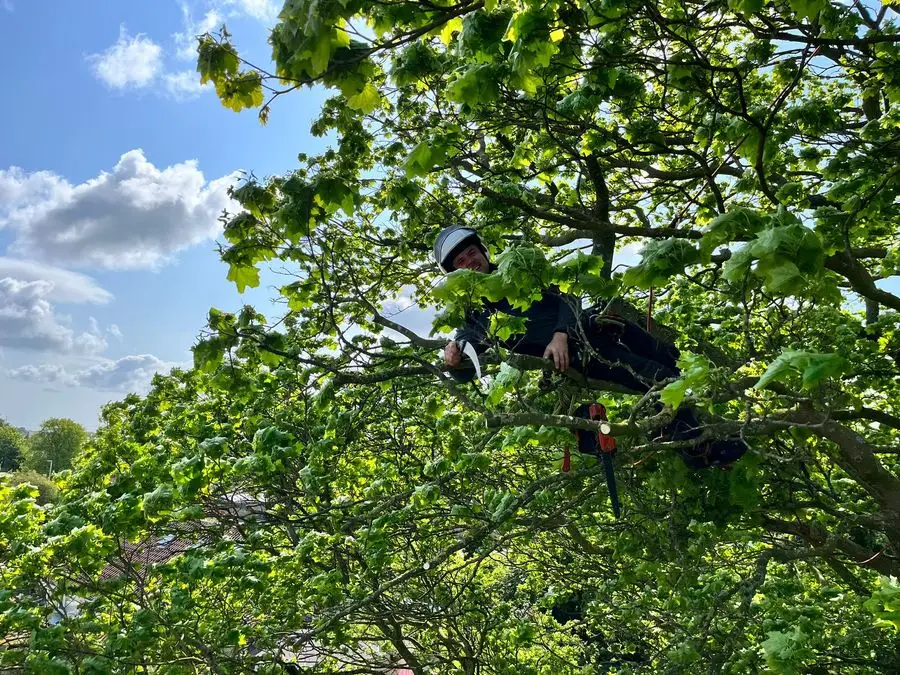
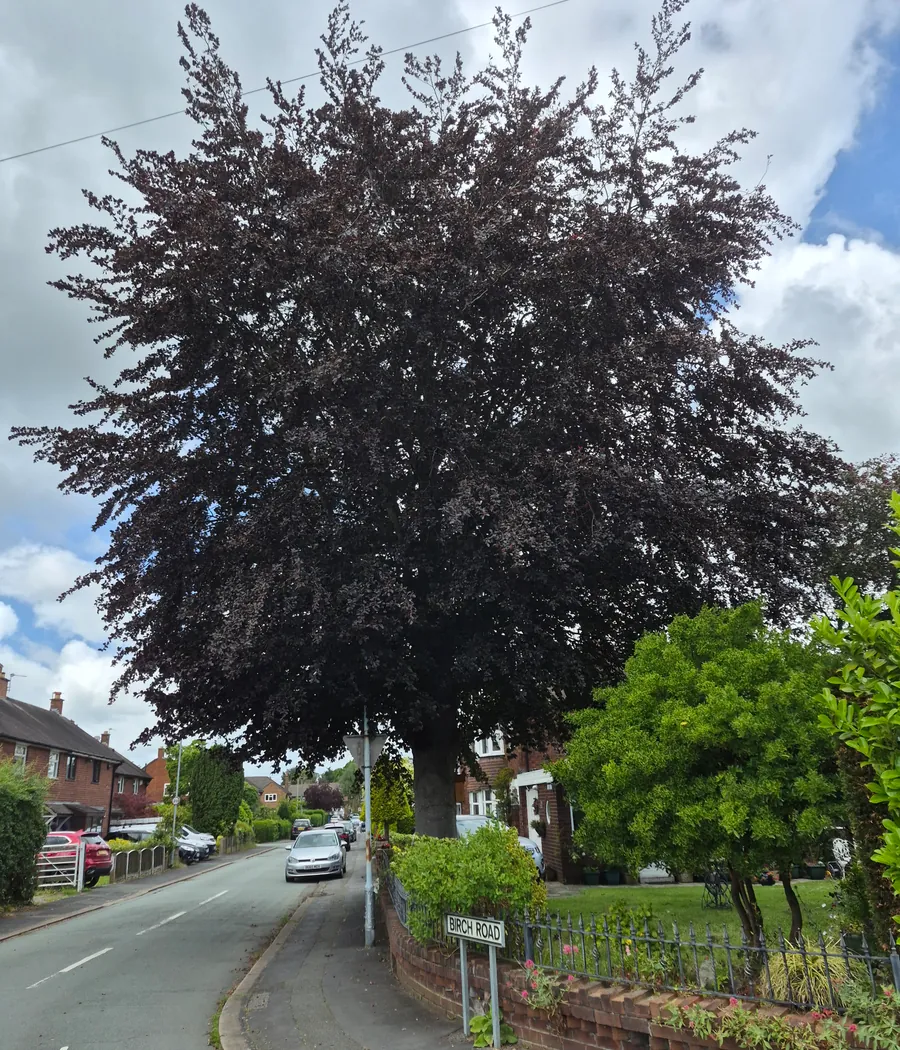
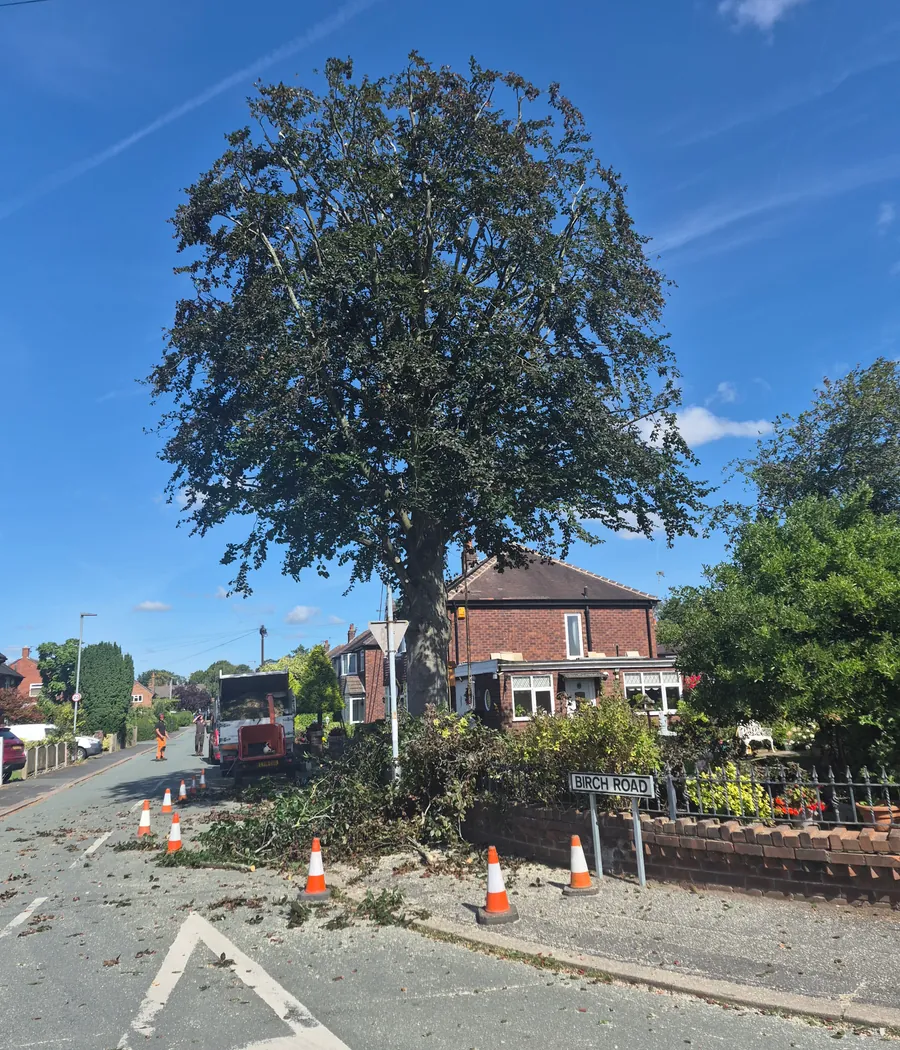
A crown reduction takes the overall height and spread of a tree back by a set amount, usually somewhere between one and three metres depending on the species and how it has grown. Every cut is made back to a suitable side branch that can carry on as the new growing point, so the tree keeps its outline and heals properly instead of being left with blunt stumps.
It is the right call when a tree has outgrown its spot, when branches are rubbing on a roof or filling the gutters, or when an older specimen is carrying more weight out on the ends of its limbs than the structure underneath can comfortably hold.
Reduction, thinning and lifting are three different jobs
People use these terms as if they mean the same thing, so here is the plain version. Reduction makes the tree smaller all round. Thinning leaves the size exactly as it is but removes a percentage of the inner growth, so wind and daylight pass through the canopy rather than hitting it like a sail. Crown lifting takes off the lowest branches to give you clearance over a lawn, a path, a drive or a neighbour's fence.
Plenty of jobs want a bit of two of them. A lime that blocks the kitchen window might get a light reduction on the house side and a lift over the patio, and that is usually a better result than hacking the whole thing back.
Why topping wrecks a tree
Topping is when someone runs a saw straight across the top of a tree and leaves a row of stubs behind. It is quick, it is cheap, and it is the fastest way to ruin a healthy tree. The tree panics and throws out masses of weak, fast growing shoots around each wound. Those shoots are only anchored in the outer layer of wood, so a few years down the line they start snapping out in high wind, and you end up with a bigger problem than the one you started with.
Wounds that size also struggle to seal over, which gives decay a straight route into the top of the trunk. Proper reduction works back to a growth point every time, keeps the cuts small, and leaves you with a tree that still looks like a tree.
The best time of year to prune
Most broadleaf trees are happiest being reduced between late autumn and early spring while they are dormant. There is no leaf in the way, the framework is easy to read from the ground, and the tree pours its energy into sealing the cuts as soon as it comes back into growth.
There are a few exceptions worth knowing about. Cherries, plums and the rest of that family do better pruned in summer, which keeps silver leaf disease at bay. Birch, maple and walnut bleed sap heavily in late winter, so we leave those until they are in full leaf. Nesting birds are protected by law from roughly March to August, so we always check a tree over before a saw comes out.
What is included
- Free site visit and written quote
- Full public liability insurance
- Crown reduction, thinning and crown lifting
- Deadwood and crossing branches taken out
- Work carried out to BS3998 good practice
- Help with TPO and conservation area paperwork
- All brash chipped and taken away
- Logs left for your burner if you want them
Protected trees and council consent
Any tree with a Tree Preservation Order needs written consent from Cheshire East before pruning starts, and if your property sits inside a conservation area you have to give the council six weeks of notice first. That applies to a reduction or a thin just as much as it does to felling one, which catches a lot of people out.
The applications are free and they are routine once you know the form. Ask us when we come out to quote and we will check whether your tree is covered, then help you word the application so it describes the work you actually want.
Left tidy, every time
All the brash goes through the chipper on the day. Larger wood is cut down and stacked wherever suits you, or taken away if you would rather see the back of it. The site gets raked and blown through before we pack up, so the only thing you should notice is more light in the garden.
Call 07943 961691 or use the form below. Free quotes, honest advice, no pressure.
Ready when you are
Get a free, no-obligation quote. Most enquiries get an answer within 24 hours.
For anything urgent or dangerous, skip the form and call directly:
📞 07943 961691Thanks, that's on its way! 🌳
We'll be in touch within 24 hours. For anything urgent, call 07943 961691.