
Hedge Cutting & Trimming
Hedges trimmed, shaped and kept under control, from a quick seasonal tidy-up to reclaiming one that has got completely out of hand. Congleton and South Cheshire.
Get a Free QuoteWhen to cut, and what to cut when
Most garden hedges are happy with a trim once or twice a year. Formal hedges like privet, box and hornbeam look their best with two cuts, one in late spring and another in late summer, which keeps the sides tight and the top dead level. Beech and yew are usually fine with a single cut in late summer, and yew is the one conifer that will take a hard cut and come back from it.
Flowering and native hedges are a different job. Hawthorn, blackthorn and mixed country hedges are better cut in winter once the leaves are down and the berries have been eaten, so you are not stripping out flower and food at the same time. If you are not certain what you have got growing, ask when we come out and we will tell you.
Nesting birds and the law, 1 March to 31 August
This is the one that catches people out, so it is worth reading properly. Under the Wildlife and Countryside Act 1981 it is a criminal offence to damage or destroy the nest of a wild bird while it is being built or in use. Bird nesting season in the UK runs from roughly 1 March to 31 August, and a thick hedge is about the best nesting habitat a garden has.
That does not mean hedge cutting stops for six months. It means somebody has to look first. Before we touch a hedge between March and August we go along it properly and check for active nests. If we find one, that stretch gets left and we come back once the birds have fledged. The duty sits with you as the landowner as well as with us as the contractor, so if a firm offers to just crack on in May without a look, that should worry you.
Conifers and leylandii: little and often
Leylandii, thuja and most other conifers will not regrow from brown wood. Cut back past the green and into the bare brown inside and that face stays brown for good. There is no growing back from it, no matter how long you wait, which is why so many streets have a leylandii hedge with one dead looking side.
So the rule with a conifer hedge is little and often. Keep it trimmed within the green, twice a year if it is growing hard, and it stays thick for decades. If yours has already been let go, the honest answer is usually to reduce what we safely can and live with the shape, or take it out and plant something more forgiving. We will tell you which, rather than leave you with a brown wall.
Reclaiming a hedge that has got away from you
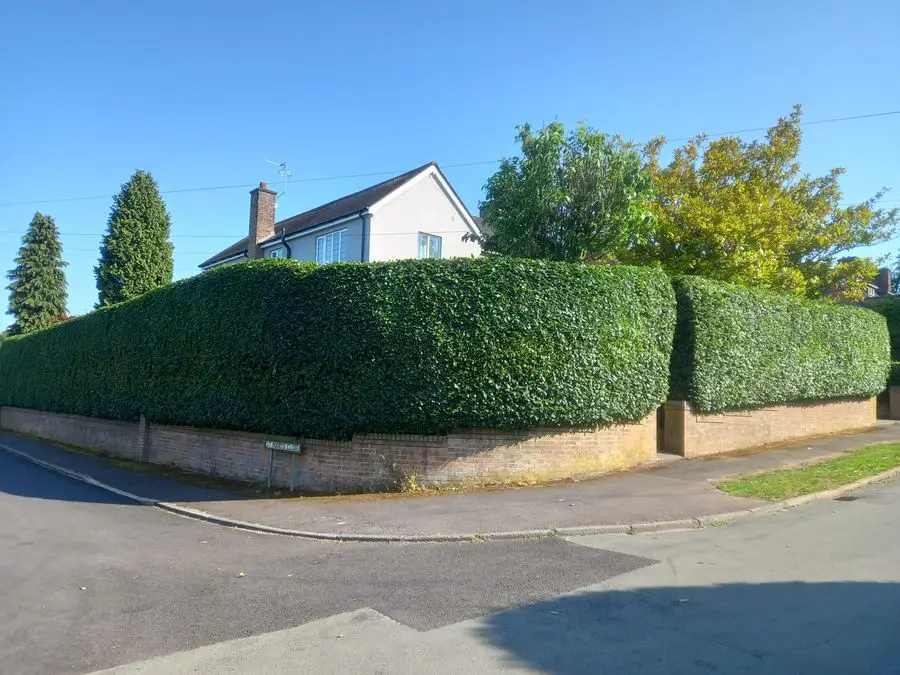
Deciduous hedges are far more forgiving. Hawthorn, beech, hornbeam, privet and laurel will all take a hard cut back into old wood and shoot again from it. The trick is not doing everything at once. We normally take the top and one side back hard in the first winter, let it push out fresh growth through the summer, then do the other side the winter after. Two seasons and you have a proper hedge again instead of a row of small trees.
What is included
- Free site visit and written quote
- Full public liability insurance
- Nest check before any work in nesting season
- Formal hedges cut square and level to a line
- Height reductions and reshaping
- Overgrown hedges reclaimed over a season or two
- Ladder, platform or climbed access where needed
- All clippings chipped and taken away
- Annual or twice yearly maintenance visits
Boundaries, neighbours and high hedges
You are entitled to cut back growth that crosses onto your side of the boundary, back to the line but no further. Strictly speaking the cuttings still belong to your neighbour, so it is good manners to offer them back. In practice a quick word over the fence sorts most of it, and if we can do both sides in one visit it usually works out cheaper for everybody.
If it has gone beyond a friendly chat, the high hedges rules under Part 8 of the Anti-social Behaviour Act 2003 cover a line of two or more mostly evergreen trees over two metres that is blocking someone's light. The council will only step in once you can show you have genuinely tried to settle it yourselves, and Cheshire East charge a fee to consider a complaint, so talking first is worth the effort.
Regular visits and a clean finish
A fair bit of our hedge work is on a rota. We put you in the diary for the same time each year, turn up, get it done, and you never have to think about it. Larger gardens and commercial sites usually want two visits a year.
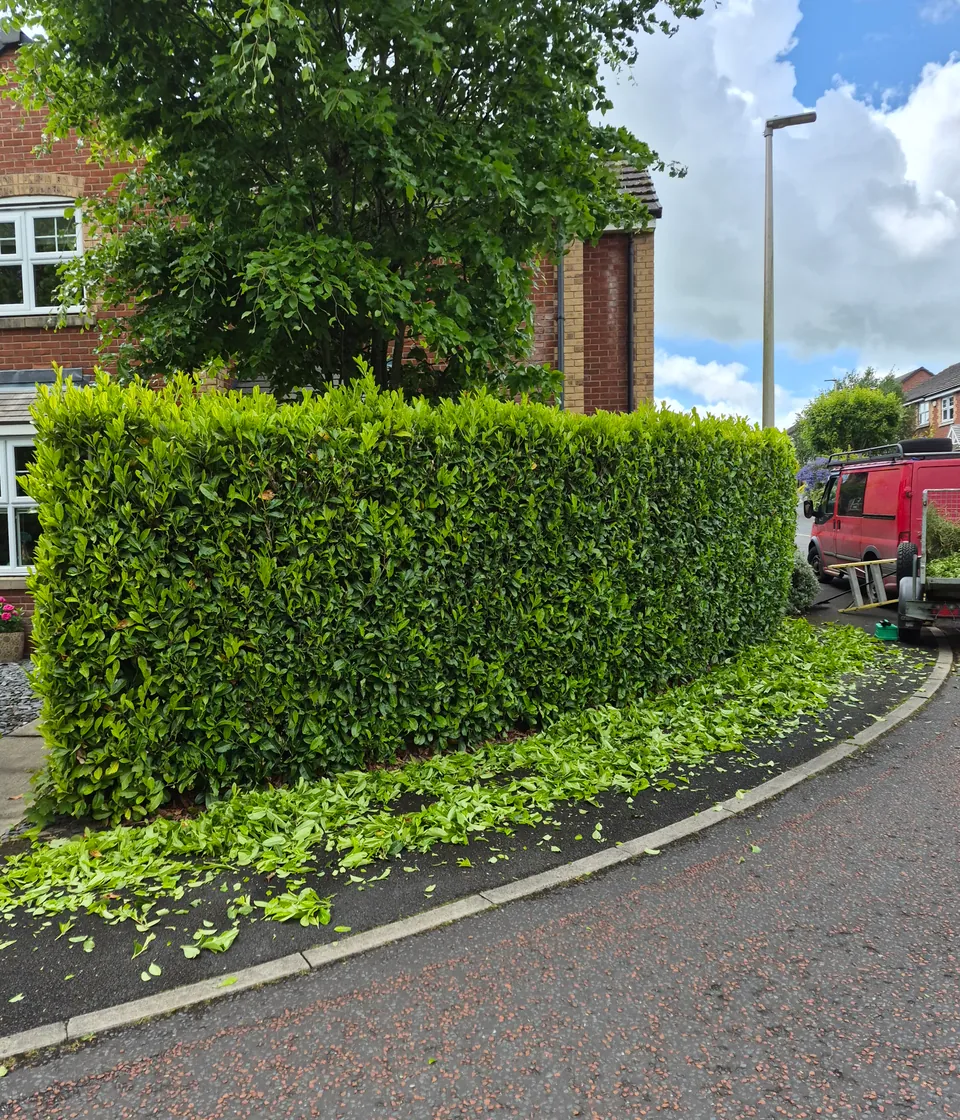
Whatever the job, every last clipping goes. Sheets down before we start, borders and drive raked and blown off afterwards, brash through the chipper and away with us. You should not be able to tell we were there apart from the hedge looking sharp.
Call 07943 961691 or use the form below. Free quotes, honest advice, no pressure.
Ready when you are
Get a free, no-obligation quote. Most enquiries get an answer within 24 hours.
For anything urgent or dangerous, skip the form and call directly:
📞 07943 961691Thanks, that's on its way! 🌳
We'll be in touch within 24 hours. For anything urgent, call 07943 961691.